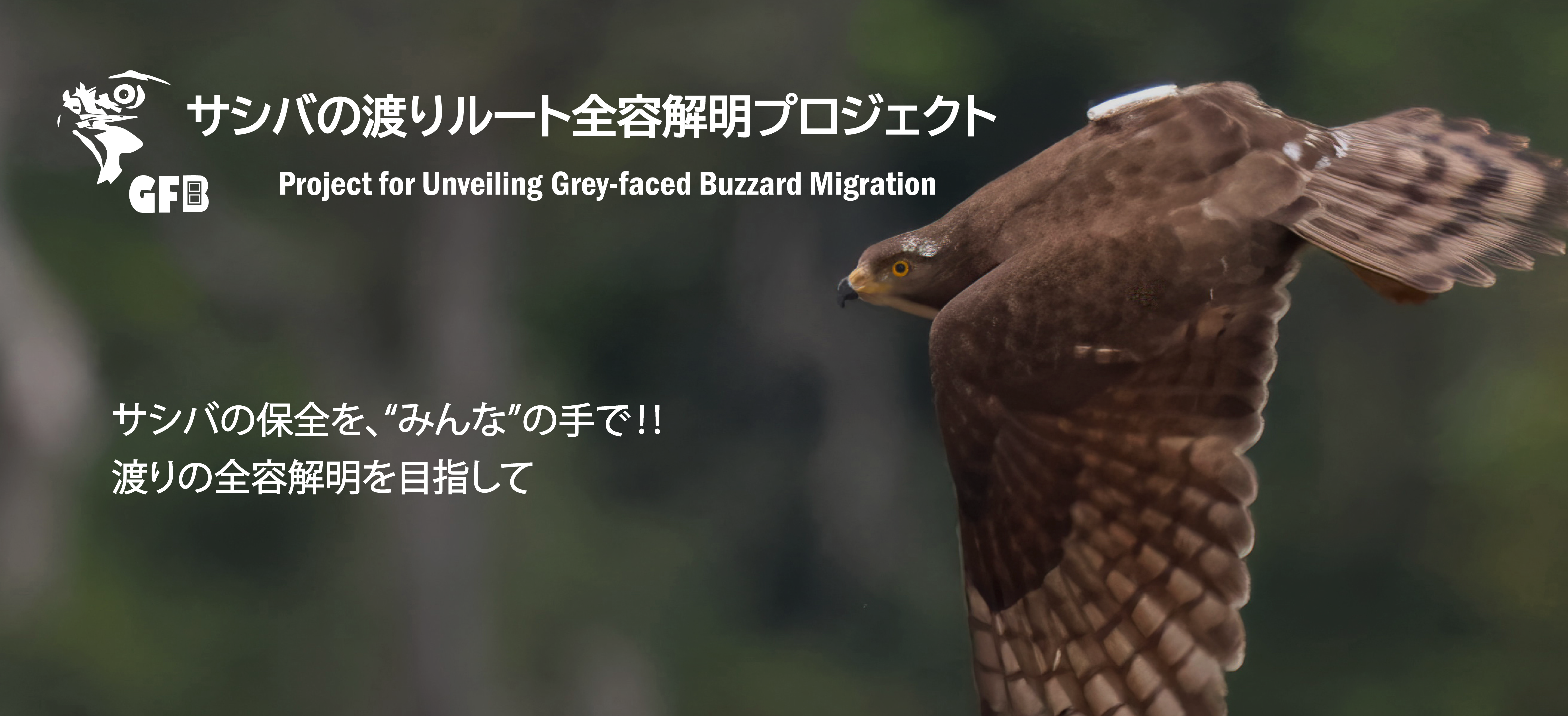
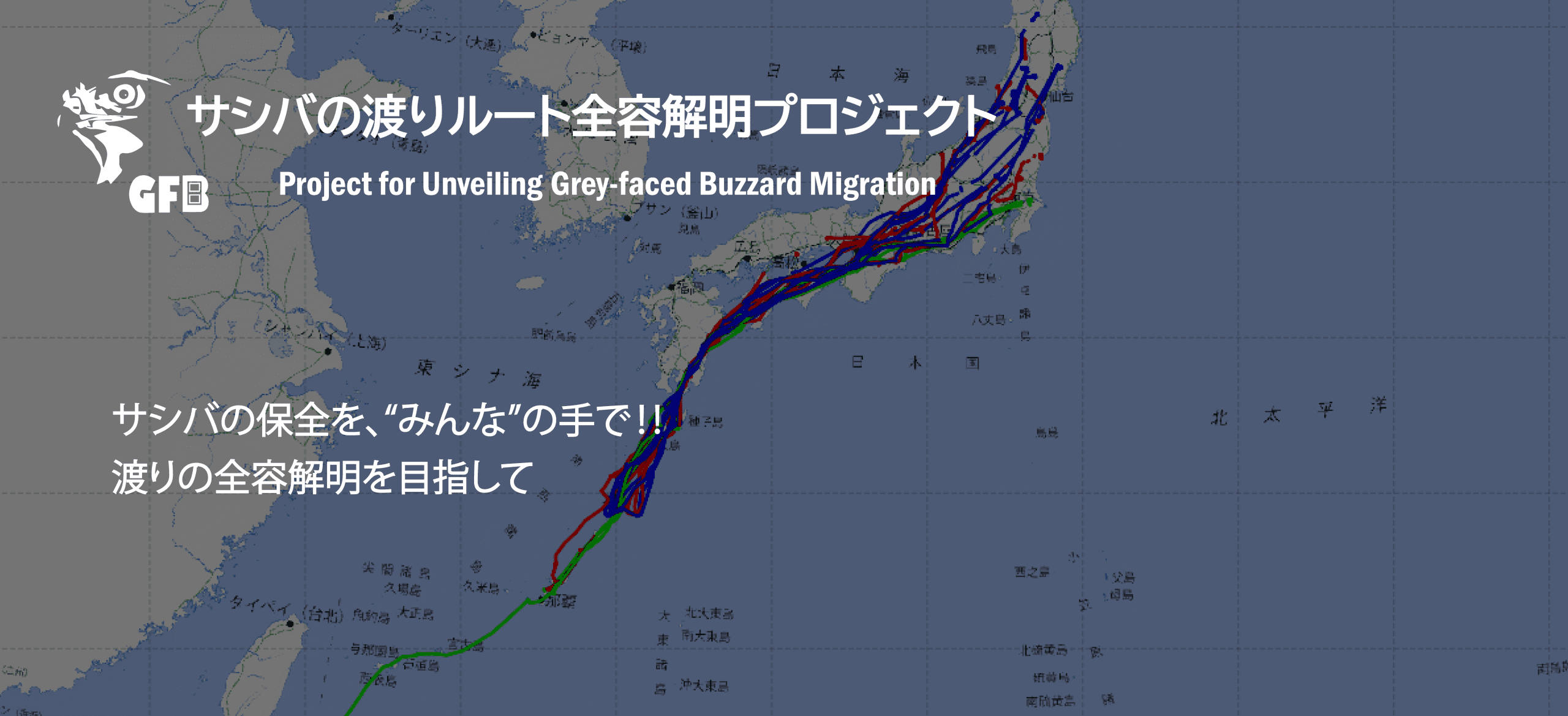

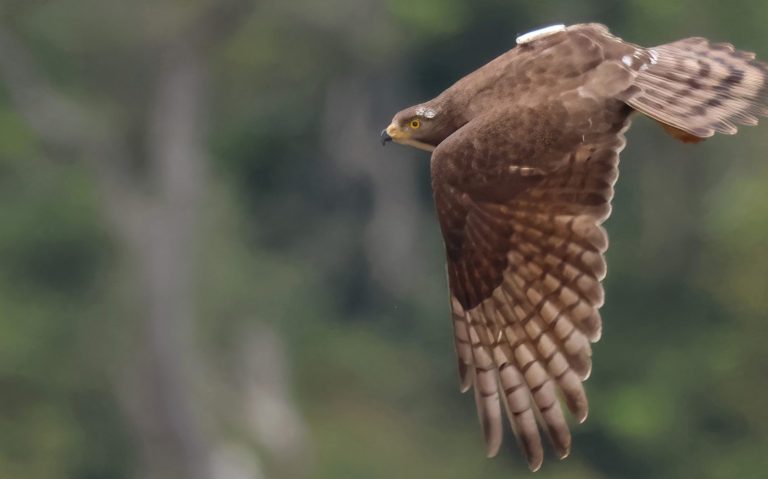
The Grey-faced Buzzard (Butastur indicus) is listed as Vulnerable (Category II) on the Japanese Ministry of the Environment Red List. A migratory bird found widely across Asia — including Japan, China, South Korea, Taiwan, the Philippines, and Indonesia — it breeds primarily in China, South Korea, and Japan, before migrating to overwinter in places such as the Philippines. This wide-ranging journey means that conserving this species requires international cooperation and information-sharing. It also calls for identifying key breeding sites, stopover sites, and wintering grounds, as well as the migration routes that connect them, so that targeted conservation measures can be put in place across all of these areas.
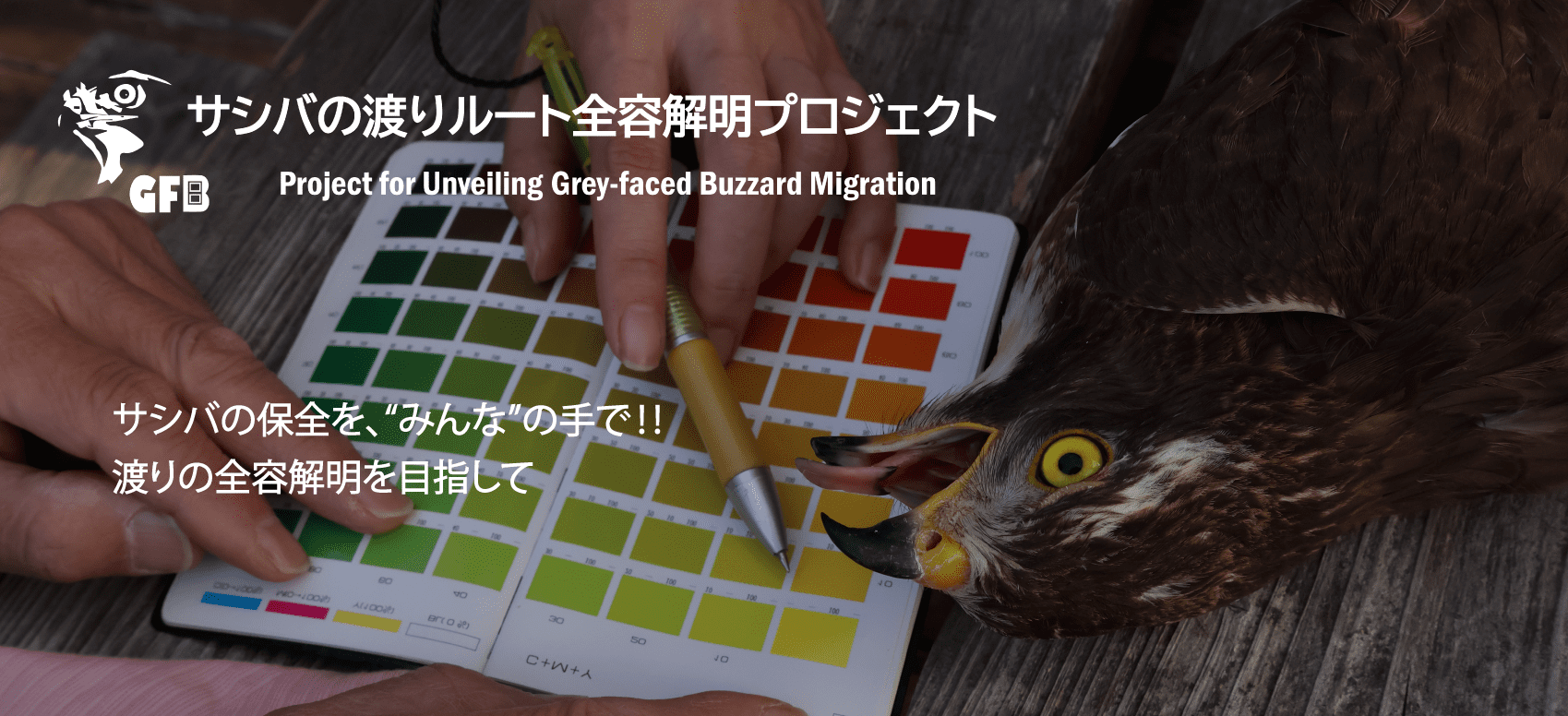
Among these efforts,. it is necessary to accumulate data by attaching GPS tags to as many individuals as possible across their entire distribution range, while filling in the gaps in current knowledge. This project must be carried out over many years and across various regions. Accordingly, we have established medium- to long-term research plans and are proceeding with the project with an emphasis on continuity.
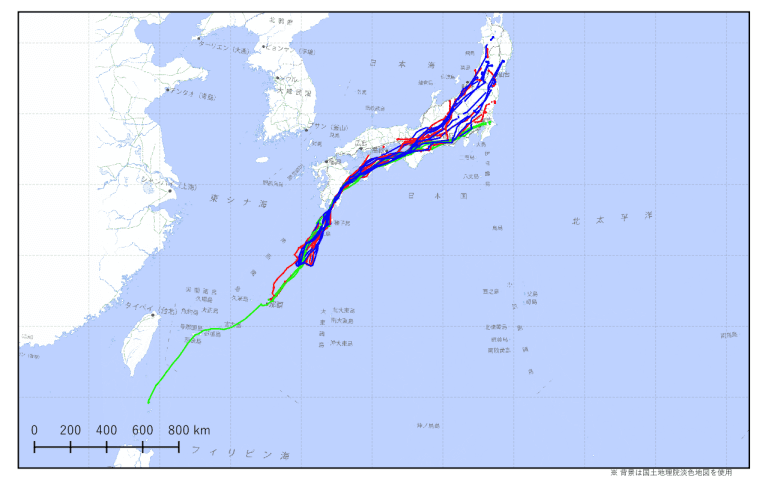
Several studies using satellite tagging have already shed light on the migration routes of the Grey-faced Buzzard, significantly broadening our understanding of the species. Yet many mysteries remain: How do they live on the wintering grounds? Do birds from different regions follow different migration routes? Do they return to the same habitats each year? Much is still to be discovered . To address these questions, we launched this project with the goal of fully mapping the migration routes of the Grey-faced Buzzard. Building a complete picture of their migration requires attaching GPS tags to as many individuals as possible across their entire range, steadily filling in the gaps in our current knowledge — a process that will unfold over many years and across many regions. With this in mind, we have established a medium- to long-term research plan, with continuity at its core.
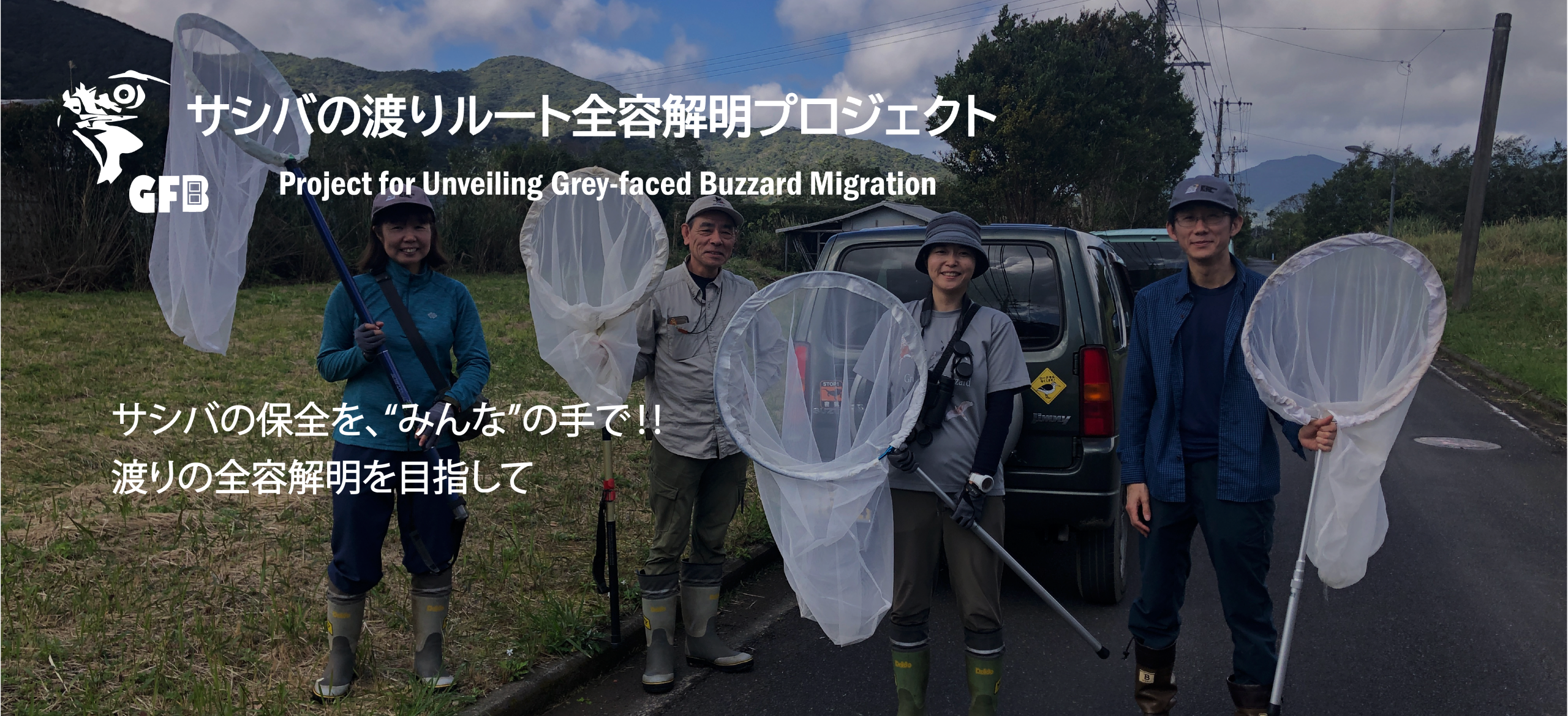
Part of the funding for this research is raised through crowdfunding. While the high cost of GPS tags is one factor, our bigger goal is to bring as many people as possible into the project — not just researchers, but birdwatchers, those with an interest in local environments, people who look forward to the return of Grey-faced Buzzards each breeding season, and farmers in satoyama landscapes who pause to watch them soar overhead. Through this shared involvement, we hope to raise awareness of the Grey-faced Buzzard and inspire a deeper connection with the species.
Conserving the Grey-faced Buzzard is not something that any one group — researchers or conservationists alone — can achieve. We believe it takes many people recognizing what is at stake, coming together, and continuing to watch over these birds for the long haul.
Looking ahead, we hope to help build a society where conservation and community stewardship are woven into everyday life — so that the landscapes where Grey-faced Buzzards soar can be preserved, and people and birds can thrive together.
Related Sites
The Hawk Migration Network of Japan has created a dedicated website featuring information on our GPS-tagged Grey-faced Buzzards. We sincerely appreciate their support.
For more details, please visit their website via the link below.
Participating Organizations (listed in Japanese syllabary order)
- Member Organizations: Asian Raptor Research and Conservation Network, Amami Ornithologists’ Club, The Nature Conservation Society of Japan, Japanese Society for Preservation of Birds Wild Bird Society of Japan
- Cooperating organizations: Raptor Research Group of Taiwan, Terada Honke Co., Ltd., Nueva Vizcaya State University, Raptorwatch Network Philippines